Tuesday, 3 July 2018

The Month That Was……June 2018


A month that saw the World Cup thrust upon us pretty much 24 hours a day…..you would be forgiven for missing all the political and economic shenanigans that have been going on!

So just how will June 2018 be remembered?

   
Trade Wars
Not content with picking a fight with China, Trump flexed his muscles with the EU. The steel tariffs that caused a stir with China are now being imposed on EU steel imports also.
 
As a counter attack, the EU has issued a 10-page list of tariffs on US goods ranging from Harley-Davidson motorcycles to bourbon.
 
It all seems a little petty at face value (who’d have thought it with Trump involved!) and a little tit-for-tat but it certainly has an unnerving feel and investment markets certainly get spooked by it.
 
When all the political pouting and posturing is done, hopefully an amicable middle ground can be found for all countries.  


Interest Rates
For what feels like the 300th month running, the debate about when interest rates will rise grew louder. 

Whilst the Bank of England kept interest rates on hold, there was a ‘firm signal’ that an August rate rise is likely.
 
In a decisive move, the Bank’s chief economist, Andrew Haldane, joined two other members of the Monetary Policy Committee who voted for an immediate rate rise to 0.75%. The nine-member MPC was split 6-3, with the Governor of the Bank, Mark Carney, leading the group who voted to hold interest rates at 0.5%.
 
The last time three people ‘dissented’ from the overall view, in June 2017, interest rates rose the following November.
 
We shall see……it could all be ‘much ado about nothing’ if economic results are weaker than forecast.
 

Petrol
Petrol prices rose by 6p a litre in May - the biggest monthly increase since the RAC began tracking prices 18 years ago.
 
Average petrol prices hit 129.4p a litre, while average diesel prices also rose by 6p to 132.3p a litre.
 
Why? A combination of higher crude oil prices and a weaker pound was to blame for the increases. Oil prices broke through the $80-a-barrel price, which is a three year high.
 
As well as the higher global market price of crude oil, the pound's current weakness against the US dollar also makes petrol more expensive as oil is traded in dollars. And yes……you can blame Brexit for that!
 

Brexit
Theresa May has been warned that time is running out to secure a Brexit deal as she faced the other 27 EU leaders at a summit in Brussels.
 
The PM briefed all her counterparts for the last time before October, when both sides hope a deal will be done on the UK's March 2019 departure. Irish leader Leo Varadkar said the lack of progress was "disappointing". He said he expected fellow leaders to send a "strong message" to Mrs May that talks had to "intensify".
 
No kidding! We haven’t managed to negotiate anything of any significance as yet and we leave in March. That really is quite an achievement.
 
The PM has called her cabinet together for what has been billed as a ‘make or break’ meeting at Chequers on 6 July to agree the UK's blueprint for its future relations with the EU. Make or break? It might just break my patience with the dithering!
 
Key dates:
 
18 October, 2018
EU summit during which both sides hope to agree an outline of future relations between the UK parliament and the EU.
 
31 October, 2018
The EU’s chief negotiator has said negotiations must be complete before the end of October to give the 27 EU countries time to sign off the deal. MPs in the UK Parliament will also get to vote on the final deal.
 
 
House Price Falls
UK house prices saw the biggest monthly fall for nearly eight years (according to the Halifax), as demand for homes weakened.
 
Housing demand had softened in the early months of this year, with both mortgage approvals and completed home sales edging down. On an annual basis, price growth has now slowed to 2.2%.
 
There is a double whammy to the news. Firstly, we are a nation of homeowners that needs a healthy property market (we have so much wealth tied up). Secondly, consumer spending is linked to financial confidence and there is a direct correlation with confidence and house prices.
 
First-time buyers might just be getting a little breathing space though, which is never a bad thing!
 

June’s Biggest Loser……Option 1 – UK Government (again!)
Parliament got very excited (and all news and media outlets to be fair) with debating and voting on splitting hairs on what is and isn’t acceptable in negotiations with the EU.
 
To be honest, I don’t truly believe that MP’s understood what they were voting on and they were given strict instructions from party politics on which way to vote. Forget your constituency opinion, vote as you are told in other words. Democracy at its best!
 
For those that actually want to understand how pointless the vote was, here goes……
 
MPs were deciding whether the UK should stay part of the European Economic Area after it leaves the EU - a similar arrangement to non-EU countries Norway, Iceland and Liechtenstein.
 
Like EU members, these countries are part of the EU single market - in return they are obliged to make a financial contribution and accept the majority of EU laws. The free movement of people also applies in the zone as it does in the EU.
 
Supporters of the EEA argue it would give the UK the closest possible relationship with the EU without actually being a member, as it would offer full access to the single market.
 
After the House of Lords altered the Government's EU Withdrawal Bill in favour of EEA membership, the House of Commons agreed to change it back on Wednesday evening.
 
Which begs the question……what was the point of a week of pointless political headlines!


June’s Biggest Loser……Option 2 – Royal Bank of Scotland (again!)
The Government has incurred a loss of £2.1bn after selling another tranche of shares in Royal Bank of Scotland.
 
The shares were sold at 271p each, almost half the 502p a share paid in the Government's bailout of RBS a decade ago when it rescued the bank at the height of the financial crisis. The Taxpayer holding in RBS will fall to 62.4% from 70.1% due to the sale.
 
The return was “based on the reality of the situation that RBS is now in", said Treasury Economic Secretary John Glen.
 
What a load of tosh. The Government has proved a lousy investor and the rescue has cost the taxpayer far more than just financial terms. Look at the state of some of our public services 10 years on as a result of propping up the mess created by corporate greed. The Government should not be in the business of owning banks.
 
That is the reality of the situation.  
 
Arghhhhhhh!


June’s Biggest Loser……Option 3 – Beer Shortage
Supplies of meat, chicken and beer are facing disruption by an industry-wide shortage of carbon dioxide.
 
At least five CO2 producers in northern Europe are offline for maintenance, with only one big CO2 producer in action in the UK
 
Hot weather + world cup + CO2 shortage = a shortage of beer!
 
First world problems!
 
 
And Finally……
Food giant Heinz is set to ditch the name of its famous Salad Cream for the first time in 104 years by changing it to ‘Sandwich Cream’. The maker claims that as only 14% of buyers actually used the sauce on salads, the name no longer reflects its modern purpose.
 
Nice one millennials.

Wednesday, 30 May 2018

The Month That Was……May 2018


A month that saw the beginning of GDPR…..and an end to the tons of unwanted emails it created. Hopefully! Throw in Trump, Brexit, a royal wedding and a few economic twists and turns for good measure……what a month!
 
So just how will May 2018 be remembered?


Trump v China
In March, Trump imposed worldwide tariffs of 25% on US imports of steel and 10% on aluminium. These were basically designed as an attack on China and the flexing of US muscles.
 
Some countries were exempted temporarily from those tariffs, including Canada, the EU and Mexico. China was not included in the exemptions and later retaliated with its own duties on some US imports.
 
Mr Trump responded by calling for further US tariffs against China, escalating trade tensions between the two giants.
 
However, May has seen Trumps stance soften……perhaps learning from the lessons of Obama.
 
In 2012, Obama introduced a 35% tariff on Chinese car tire imports. The result was a 28% reduction in Chinese car tire imports, a 14% increase in US tire production and 1,200 jobs saved.
 
Good times?
 
Well, it came at a cost. Firstly, US consumers had to pay $1.1 billion more for the higher cost of car tires. Secondly, 3,700 jobs were lost as a consequence of China retaliating with tariffs on US imported chicken and US farmers lost $1 billion in sales.
 
Not quite the story Obama spun in his State of the Union address in 2012 that claimed “over a thousand Americans are working today because we stopped a surge in Chinese tyres”.
 
Perhaps, just perhaps (and say it quietly) Trump might be a little cleverer than we thought. Or maybe his advisers are a little cleverer than we thought!

 
Eurozone Growth
The European Union economy slowed in the first quarter of the year, official Eurostat figures have shown.
 
However, growth still reached 2.5% year-on-year and the eurozone is still doing better than the UK economy. It was the fifth out of the last seven quarters that the eurozone grew faster than the UK following the EU referendum.
 
As our biggest trade partner, Eurozone economic growth is crucial to our own economic performance.


UK Economy
The UK economy is incredibly dependent on consumer spending (the second largest consumer driven economy in the world – second only to the US) and one of the key ingredients for growth is that wages grow faster than inflation. Or to put that another way…….we have more cash in our pockets to spend.
 
On the positive……
Some welcome news this month that wages rose at an annual rate of 2.9%, faster than inflation for the first time in more than a year.
 
On the negative……
Surging oil prices are set to add to inflation over the coming months and higher energy prices will squeeze household incomes again.
 
Oil has leapt to $80 a barrel recently and some economists are warning it could rise to $100 a barrel in the summer.


FTSE Well Lubricated
Higher oil prices might be bad news for the economy but the oil rally sent London share markets to an all-time high. The FTSE 100 surged to a record level, boosted by oil majors Royal Dutch Shell and BP.
 
The FTSE has also been boosted by recent weakness in the pound, which inflates foreign earnings.
 
But will it last?


The Cost of Brexit
The Governor of the Bank of England claimed this month that households were at least £900 a year worse off and the economy is £40 billion smaller as a result of the Brexit vote. Not for the first time, the Governor seems more pre-occupied with column inches than substance. 
 
That’s great and feather in your cap for having a sophisticated abacas to calculate it……but how does that help us?
 
The resources used for these calculations would be better served in addressing the issue and getting creative to stimulate the economy. Just a thought.
 
We only have to wait until next June to replace the Governor and, who knows, the replacement might just stimulate us.
 

Noel v Lloyds
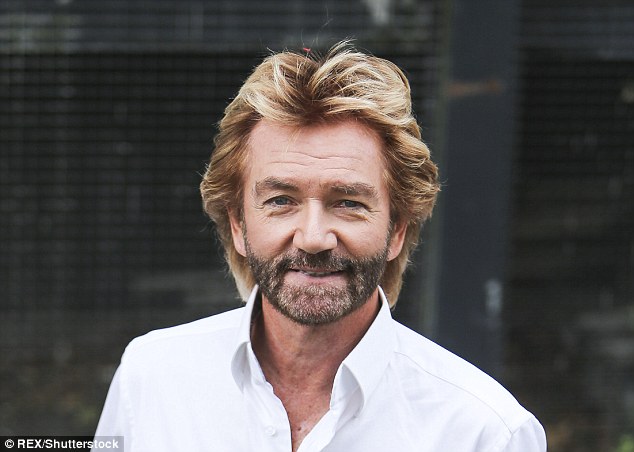
It’s not too often you hear “spare a thought for Noel Edmonds” but he is on an admirable one-man crusade to take on Lloyds bank.
 
Edmonds is seeking compensation from Lloyds after claiming he was on the brink of suicide after falling victim to bank fraudsters. The fraud resulted in a number of bankers and their associates jailed for a combined 50 years in 2017.
 
Edmonds is now suing the bank for alleged fraud but the bee in his bonnet this month was the proposed 11% pay rise for Lloyds Bank chief executive Antonio Horta-Osorio (who earns £6.5 million a year already).
 
Edmonds bought one share for 67p to allow him to attend the AGM meeting and let his feelings be known.
 
Not too many take on the juggernaut of the banking sector, but fair play to Edmonds for having the conviction to take it on. 
 
Deal or no deal. Jail or no jail. We shall see.


May’s Biggest Loser……Option 1 – UK Government
The UK Government will host a summit encouraging six European countries to join the EU for the sake of their “security, stability and prosperity”……8 months before the UK signs its own Brexit withdrawal deal with Brussels.
 
The leaders of EU candidate countries Albania, Montenegro, Macedonia, Serbia, Bosnia and Herzegovina and Kosovo will attend the summit in July in London.
 
Is our Government really that incapable of requesting that the meeting be moved to a different EU member state in the (almost) two years since the referendum?
 
Hypocrisy? Irony? Incompetence? Regardless……you couldn’t make it up. It’s just soooo Brexit isn’t it!


May’s Biggest Loser……Option 2 – Royal Bank of Scotland 
Royal Bank of Scotland has ‘agreed’ a $£3.6 billion penalty with US regulators. The long-running probe focused on the sale of financial products including toxic mortgage bonds in 2005, ahead of the financial crisis.
 
Congratulations you are the proud owner of a £3.6 billion fine (as us taxpayers are a 70% shareholder in Royal Bank of Scotland)!
 
This is seen as a pivotal point for the bank as the Government could not sell the taxpayers stake until the fine was known and paid. Which begs the question……
 
Why has it taken 13 years to get to this ‘pivotal point’?
 
We could have cut a deal, sold the taxpayer stake and boosted the public coffers years ago. But that is logical and requires applied common sense.
 
Arghhhhhhh!


May’s Biggest Loser……Option 3 – GDPR
The General Data Protection Regulation 2016/679 is a regulation in EU law on data protection and privacy for all individuals within the European Union and the European Economic Area and came into being on 25 May 2018.
 
What it was designed to do……was establish global standards on data protection that put the EU at the forefront in protecting its citizens.
 
What it actually did……was put the fear of (insert your chosen preferred word) up business owners panicking at the ambiguous ‘guidelines’ and created billions of SPAM emails that the legislation was designed to stop.
 
Oh, the irony. And EU bureaucrats wonder why no one likes them.
 
 
And Finally……
The official term for unpaid carers is now ‘economically inactive’. It's laughable that in this day and age that is seen as economic inactivity. Surely ‘unpaid’ services have key economic benefits as they are free and our economy is entirely dependent on this sort of unpaid labour.
 
The world has gone crazy. It’s official!
 

Tuesday, 1 May 2018

The Month That Was……April 2018


It was a great month for the media given all of the political twists and turns that Westminster churned out. The political elite even managed to trump well, err, Trump for headlines. It was almost commendable if the stories weren’t so damn shameful.
 
So just how will April 2018 be remembered?

Weak UK Growth


The UK economy grew at its slowest rate since 2012 in the first quarter of the year, the Office for National Statistics (ONS) has said. GDP growth was 0.1%, down from 0.4% in the previous quarter, driven by a sharp fall in construction output and a sluggish manufacturing sector.

Why?
 
Is it Brexit? Beast From The East? Post Christmas Blues?
 
I guess it depends on what your political message is as to which excuse you spin as the reason. However, in reality it is probably a cocktail of all of the above.
 
Brexit uncertainty is having the biggest impact and drag on the economy, as the International Monetary Fund has made clear. The UK was top of the global growth league of our main industrial competitors before the referendum. We are now languishing somewhere near the bottom.
 
 
Interesting
At a time when we have seen only one rate rise in the past decade, there has been a growing swell of opinion that interest rates are destined to rise. The latest minutes from the Monetary Policy Committee appear to show that the Bank of England has left the door open to raise UK interest rates in May as 2 of the 9 members of the committee backed an increase in April.

That is all well and good but an economy has to be able to sustain any interest rate rise and the 0.1% quarterly economic performance is the worst since 2012 and inflation at 2.5% is lower than expected. It’s hardly the perfect storm for an interest rate rise.
 
Regardless of the decision to increase or not, I’m pretty sure the media will make us believe it is the worst decision ever.
 
 
Darling Sterling

It appears that the pound is the darling of the currency world right now as it has stopped trading on Brexit developments for the time being and is moving more on its fundamentals.
 
Gone are the days of noisy Brexit headlines stirring sharp knee-jerk moves in the currency world.
 
The pound has been close to trading at its highest level since the Brexit vote.
 
Several factors have played a role in this recent resurgence, ranging from increased market confidence that the UK and EU can strike a Brexit deal, to falling confidence in the agenda of US President Donald Trump.
 
With Brexit negotiations being turned up to ‘11’ next month, we need some substance to the political flirting from an economic perspective. Breath isn’t being held though.
 
 
Computer Says “No”

A media frenzy was caused by an IT balls up of an Amber Rudd scale by TSB.
 
It all started so innocently with TSB migrating to a new banking platform and transferring five million customers and their 1.3 billion records from the platform of previous owner Lloyds to new servers of their own.
 
What could possibly go wrong?
 
As soon as the new system was switched on, customers reported seeing other people's account details and being unable to view, access and use their own account. All in all, a 2 week mess for account holders and a PR disaster for TSB.
 
 
Sex Issues?

In a bid to get to the bottom of pay inequality, firms with more than 250 staff (around 10,000 companies) had to file a report confirming the average difference between male and female employees.
 
The average pay gap among all companies was 9.7%. 78% pay men more than women, 14% pay women more and 8% said they had no gender pay gap.
 
One of the biggest / worst offenders was Ryanair, which reported a 71.8% gender pay gap. Hearing the repetitive muck coming from the owner’s mouth in the media all too often, I can’t say I’m surprised. I’m not surprised either that the Banking Sector was the worst offending sector. Who’d have thought it!
 
Meanwhile, High Street brands KFC, Matalan, Starbucks, Costa, McDonald's and Primark reported no difference in what they paid their female and male staff. Good on you.
 
Let’s see what call to action we get from Westminster……surely this can’t be right and proper in 2018?
 
 
April’s Biggest Loser……Option 1 - Facebook Losing Face

On the basis that you are not a female working for Ryanair who has a TSB bank account……could the biggest loser this month be Facebook?
 
Cambridge Analytica has been at the centre of a row over whether it used the personal data of millions of Facebook users to sway the outcome of the US 2016 presidential election and the UK Brexit referendum. In short, 'political manipulation' was at play.
 
Within a week, Facebook had $58bn wiped off its valuation. That’s more than the market valuations of Ford, eBay and Delta Airlines. Ouch!
 
This story will run and run thanks to the political tones……a perfect storm for the media. 
 
 
April’s Biggest Loser……Option 2 - Conservatives Losing Face
On the basis that you are not a female working for Ryanair who has a TSB bank account and you are a significant holder of Facebook shares……perhaps the biggest loser this month are the Conservatives?

Cambridge Analytica it appears, has close links to the Conservative Party.
 
- The parent company of Cambridge Analytica (SCL Group) has been run by a chairman of Oxford Conservative Association.
 
- It's founding chairman was a former Conservative MP.
 
- A Cambridge Analytica director appears to have donated over £700,000 to the Conservative party.
 
- A former Conservative party treasurer is a shareholder.
 
- Government departments have had three contracts with the SCL Group recently.
 
Pick the bones out of that lot! Gobsmacking and terrifying in equal measures!
 
 
April’s Biggest Loser……Option 3 – Rudderless Home Secretary

Amber Rudd resigned as Home Secretary as she had "inadvertently misled" MPs over targets for removing illegal immigrants. April’s biggest loser?
 
The story goes…….Ms Rudd told MPs that the Home Office did not have targets for removing illegal immigrants. Unfortunately (well, for her) the Guardian published a letter in which Ms Rudd set out her "ambitious but deliverable" aim to deport 10% more illegal immigrants over the "next few years" to Theresa May. Err......that’s targets then.
 
Well, I declare. That is quite some mismatch between what she told MPs and the evidence which then emerged.
 
 
And Finally……

President Trump is to visit the UK in the summer. Oh the joy……can we pretend we are not in?